http://coloradooutdoorsmag.com/2015/11/13/an-important-message-from-cpw-director-bob-broscheid/
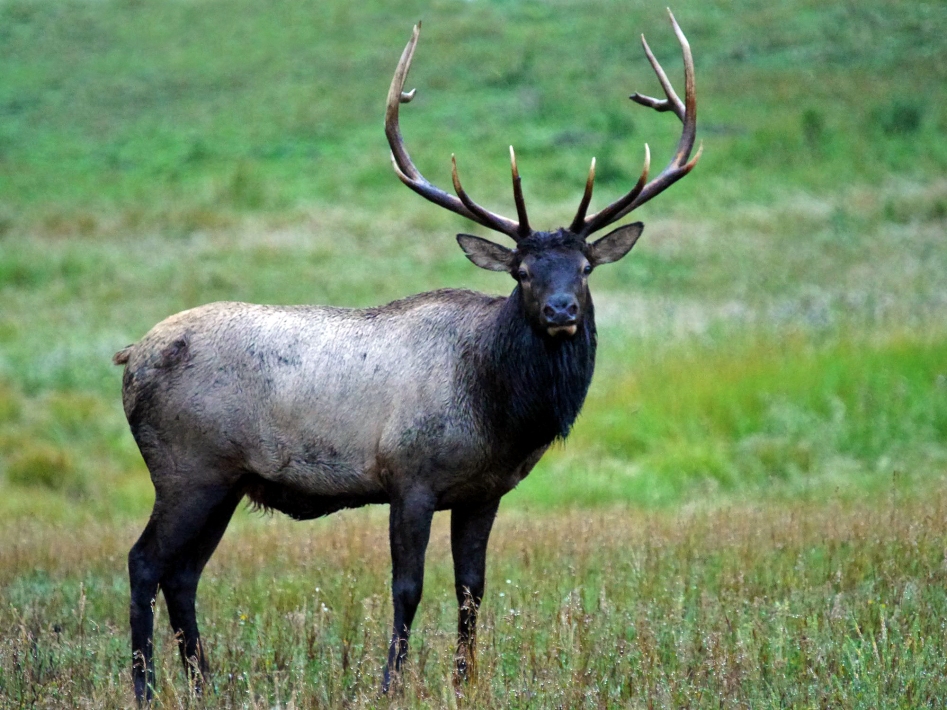
A bull elk. Photo by © Jerry Neal/CPW.
A century ago, wildlife conservation in the United States was
focused on the protection and improvement of our lands and wildlife
populations. Game wardens were hired and charged with enforcing new
regulations on wildlife take, designed to ensure that wildlife species
would remain abundant for future generations. Hatcheries were developed
to provide more opportunities for fishing in the nation’s vast network
of lakes and streams. Hunting, fishing and exploring the outdoors were
considered hardy sports that improved the national character and
provided opportunities for individuals to prove their worth. These
examples and many others were made possible by sportsmen and women’s
willingness to pay directly for conservation.
Much has changed over the last 100 years, but the value of wildlife
and the outdoor experience has not. Today, Colorado Parks and Wildlife
manages the largest elk herd in North America, raises more than 90
million fish annually and is busy tracking disease, mitigating invasive
species and educating outdoor enthusiasts on how to safely recreate on
Colorado’s rivers and in the backcountry. Simultaneously, Colorado’s
strong economy is bringing in new residents who want to be here because
of Colorado’s natural beauty, diverse landscapes and access to outdoor
recreation. Cities have developed where small towns had been and a
growing population is filling in all corners of Colorado’s landscape.
Oil and gas development is expanding as new technology allows access to
resources that were previously impossible to extract. These sweeping
changes have altered the landscape upon which Colorado’s wildlife
depends. However, none of these trends change the fact that hunters and
anglers continue to pay for the management of fish and wildlife.

Photo by © Wayne D. Lewis/CPW.
As threats to wildlife and the complexities of management increase,
Colorado Parks and Wildlife continues to adapt to these challenges with
an ever-shrinking revenue dollar by becoming more efficient and scaling
back on services and programs. In the past several years alone, we have
cut more than $40 million out of our wildlife program budgets and
defunded more than 50 wildlife positions.
At the end of 2011, the Division of Wildlife merged with Colorado
State Parks to create Colorado Parks and Wildlife. The merger allowed
the Parks and Wildlife Commission to take advantage of additional
efficiencies and reduce costs; it also provided opportunity for two of
Colorado’s premier outdoor recreation agencies to speak with one voice.
Our wildlife managers serve and protect as their game warden
counterparts did a century ago, while taking on new responsibilities
such as education, land-use planning and biological monitoring.
Similarly, park rangers are patrolling and keeping our state parks safe
while introducing people to unique outdoor recreation experiences. The
roles in which our employees serve have expanded to include education
specialists, researchers, biologists and customer service
representatives to name a few — all designed to serve Colorado more
effectively. The combination of our skills allows us to be stronger as
an agency, and better at not only managing our natural resources, but
also reminding people why that management is important and providing
more opportunities to get outdoors.

Although the merger allowed for certain efficiencies, it was not a
magic bullet to solve budgetary problems on either “side of the agency.”
The two agencies merged, but the funding sources that provide support
remain separate, as mandated by state and federal law. The
Pittman-Robertson and Dingell-Johnson Acts passed 78 and 65 years ago,
respectively, require that revenues collected through hunting and
fishing licenses must fund wildlife programs and cannot be used for
unrelated purposes. As a result, our agency’s budgets remain separate.
Revenues that support both sides of our agency budget, wildlife programs
and parks, have not kept pace with the cost of doing business today.
Historically, Colorado fishing and hunting fees have been increased
every 7-10 years. Our last resident price increase was passed by the
legislature in 2005; the one before that was approved in 1988. Part of
the reason why we have been able to extend the period between increases
is because nonresident big-game licenses have been tied to the Consumer
Price Index (CPI) since 2000.
Nonresident big-game license fees increase slightly in most years,
helping us to keep revenue in line with costs to a degree. However, as a
result of CPI, resident big-game hunters are paying less now than they
have historically when compared to their nonresident counterparts.
Resident fees are also low in comparison to historic prices and resident
prices in other states. A resident elk hunter in 1984 paid today’s
equivalent of $66 for an elk tag; in 1955 his father would have paid
$88. Colorado’s prices are also typically below the average when looking
at our neighboring Western states.
Although potentially compelling, none of these facts makes it any
easier to open our wallets and support increasing fees to hunt and fish.
Colorado’s economy is growing, but that doesn’t mean that folks don’t
have to work hard to raise their families and earn a living wage.
However, hunters and anglers have always been strong supporters of
wildlife and habitat conservation and are the reason we enjoy such
abundant fish and wildlife populations today. Even as a shrinking
percentage of Colorado’s booming population, we have the ability to
raise our voices and speak about what Colorado means to us. The Colorado
we all cherish has healthy wildlife populations, open spaces and
abundant outdoor recreational opportunities that allow everyone to
explore our natural world and discover themselves, in no small part made
possible by the financial contributions of sportsmen and women. How
much does that Colorado mean to you?
 Written by Bob Broscheid.
Broscheid is an avid outdoorsman who loves Colorado and its abundant
natural and recreational resources. Broscheid took the helm at Colorado
Parks and Wildlife in 2013.


